Posts

Showing posts with the label agriculture

Agriculture, Water And Climate Change

Image
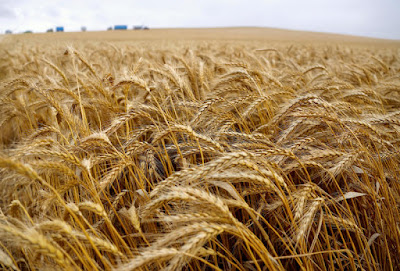
Agriculture is what feeds the world and ensures food security. For millennia, people have tilled the land and kept animals to support themselves and provide food. Agriculture is a big economic sector on its own, with returns amounting to billions of shillings and employing millions of people. Agriculture is dependent on water supply for crop growth of which majority of this is rainfed. Rain-fed agriculture implies reliance on rainfall. Some of the optimal growth conditions for food and cash crops are temperature, moisture and sunlight. Now climate change basically means that the greenhouse effect and global warming has completely thrown the hydrological cycle out of balance. This water cycle is what controls rainfall, snow, ice and so on. Effects of climate change are all effects of water. This includes droughts, heavy rain and flash floods, heatwaves, permafrost thaw, cyclones and glacier retreat and sea level rise as well. All of these have to do with water – either too much of i...
Agriculture And Climate Change

Image
  Agriculture refers to all the activities done in the process of raising livestock, planting crops and other types of farming. It refers to everything involved from start to finish, when the food is finally presented at the table. Agriculture has been a part of human life for millennia, for both domestic consumption and as an economic activity. Agriculture in all its forms takes up a third of the emissions that cause climate change. But unlike fossil fuels that can be done away with completely and substituted with renewables, agriculture is essential for human life and survival in terms of both food security and the economy. So, it can only be restructured to be less climate hazardous while still maintaining its purpose. Food security is both the ability to provide enough food, and food that is of satisfactory nutritional content. The current way of doing agriculture is resource intensive, and is one of the reasons why a third of global soils are degraded. Agriculture both...

Climate Change And Water

Image
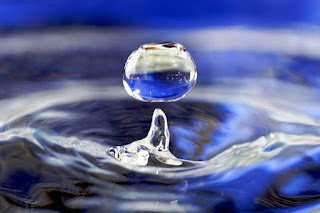
Water is life.  W e have often heard the saying, water is life or in Kiswahili Maji ni uhai . In many, very many ways water is life itself. Let’s start with the human body which is about 60% water. All life on Earth needs water for survival starting from the earthworm deriving its share from soil moisture to the animals that live in water, to water used for drinking and in growing crops and keeping livestock. 70% of Earth is covered by water. See the importance now? W e all need water to survive. C limate change refers to the associated effects on climate caused by the rise in global atmospheric temperatures occasioned by the greenhouse effect. This rise in global temperatures is known as global warming. In terms of water, climate change will and has already started affecting water supply and thus demand especially surface and groundwater recharge. It also impacts the availability, duration, timing and amount of rainfall, snow melt as well as the quality of water. ...

Back To Basics : It's The Little Things We Do About Climate Action

Image
Climate change often seems to be a huge problem, a global problem, something that cannot be solved by the ordinary person. ‘But what can I do about such a huge problem, a global problem?’, you ask. It is true, climate change is a global problem, affecting the planet everywhere albeit in different ways. It is also true that most emissions are from big industries and some things like transport emissions seems unavoidable since we all use a vehicle at some point or the other. This is changing however, with the rise of electric cars powered by renewable energy. But worry not, there are things that every person, as an individual can do to reduce their carbon footprint [1] . The goal in climate action is to shift to a low carbon pathway. A low carbon pathway is a way of life that promotes the release of zero or very little amounts of greenhouse gas emissions. It is a collective effort, where the whole of society, industries, businesses, civil society, private sector, government...

Making the most of Climate Change - Adapting African Agriculture!

Image
Hi!☺ Glad you dropped by. Here’s today’s post. A griculture is the biggest contributor to Africa’s economy, a source of livelihood; employing over 50% of the continent’s labour force.  A lot of the more than one billion people that live in this our beloved continent rely on agriculture both directly and indirectly for a livelihood, to raise their children, to have a decent quality of life, for human dignity. A frica has 65% of the world’s arable land . Of this, only 2% is under irrigation while the potential stands at 25%. Also 66% of all land in Africa is arid and semi-arid.  It is also a fact that agriculture in Africa is largely rain fed and so dependent on the natural weather patterns which are now influenced by climate change. As a matter of fact, agriculture takes up 65% of Africa's labour force     and accounts for 32% of the continent’s overall GDP [i]   I n other words, we depend on agriculture not just for food, but for the ec...