Posts

Showing posts with the label agriculture and climate change

The Relationship And Interplays Between Land And Climate Change

Image
I n the month of August, the Intergovernmental Panel on Climate Change or the IPCC in short, released a report on climate change and land . The IPCC is the body whose scientific work guides policy around climate change.   In this report, scientists assessed a wide range of material concerning the interplays between land and climate change. In it, the IPCC starts by noting that only a quarter to a third of land’s potential net primary production is being utilized. It observes that ‘land provides the principal basis for human livelihoods and well-being including the supply of food, freshwater and multiple other ecosystem services, as well as supporting biodiversity’. Now, land is both a source of emissions where it releases greenhouse gases, as well as a sink, where it absorbs them. It is important to note that all aspects of the physical environment are interconnected. Land therefore plays a huge role in the exchange of energy, the hydrological, nitrogen and carbon cy...
An (in)secure world: how does climate change impact security?

Image
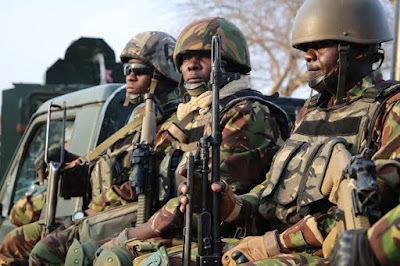
I saw a tweet the other day, which led to an article about how climate change induced shrinkage of Lake Chad has worsened the humanitarian crisis in the area.   T oday’s post is about climate change and security. In what ways does climate change interact with security issues? What are the security impacts of a sustained change in otherwise normal weather conditions?  C limate change has been said to be a threat multiplier. A threat multiplier is something that amplifies or makes a certain threat worse. It makes an already bad situation worse. It can act as a catalyst. E xtreme weather events worsen life conditions because they directly destroy livelihoods, property, and infrastructure. They negatively affect basic human needs. In  Puerto Rico power was knocked out in the entire country by Hurricane Maria. So much loss and destruction was occasioned by the hurricane that Puerto Rico has to build everything from scratch. This will  require a lot of re...

Le rechauffement climatique et l'agriculture africaine (deuxieme partie)

Image
Bon! Bienvenue et merci d’avoir cliquer sur mon blog. Comme j’ai promis, c’est le deuxième partie de l’article sur le changement climatique et l’adaptation d’agriculture africaine. Amuse et informe – toi. Adaptation simply means that we have to innovate and come up with ways of living with the present climate change while seeking to stop it from becoming worse. All in all, agriculture must be sustainable. That is, it should be viable and should be something that can be maintained. Here are a few pointers. v Agroforestry is also quite an important way of adapting to climate change and bringing about sustainable development. The idea is really quite simple, you need land to develop but you can’t go around cutting trees neither can you use your land to plant trees instead of crops. So what do you do? You plant trees that are beneficial to you. Fruit trees. Like avocado, mango, apple, coffee, passion fruit trees. Some fast maturing and leafy trees can also be cultivated...

Le climat et l'agriculture africaine (1)

Image
Agriculture is the mainstay of African economies. In Africa it is made up of several subsectors for example, crop farming, rearing livestock, aqua culture, apiculture and others.   60% of Africa’s jobs are in the agricultural sector and about 80% of the income in Africa is derived from agricultural activities. A wheat farm in Kenya - courtesy of agribourse Now, when it comes to climate change, agriculture is both a causative factor as well as a victim. Some facts, first of all. 1)       Africa produces only 4% of greenhouse gas emissions, and this is majorly through land use and forestry. 2)       Of the 10 countries most affected by climate change, 6 of them are in Africa. 3)       However Africa gets only 5% of climate finance. Do you how skewed the situation is? The Horn Of Africa has some of the worst affected countries by climate change -courtesy of agritech blog.uk In Af...