Posts

Energy, Water And Climate Change

Image
Energy is connected to water as water is connected to energy while both are influenced by climate change, further altering the dynamics of this relationship. A growing world population means more energy and water will be needed. Energy is used in withdrawal, transport, processing and cleaning of water. Water withdrawal refers to removal/collection of water from source. Energy is used to pump water from surface water (lakes, springs, rivers and even oceans) and transport it to processing plants. Here, the water is cleaned and purified according to its various purposes. Large scale distillation and chlorination, done to make water potable (drinkable) all require quite the amount of energy. Energy is then used to transport and distribute this water to households. The Kaptis Hydropower plant (image: Africa Energy Portal) Industries and farms require a different quality of water but energy is also used in water treatment and transport/ distribution especially over long distances. The ...

The Paris Climate Change Agreement

Image
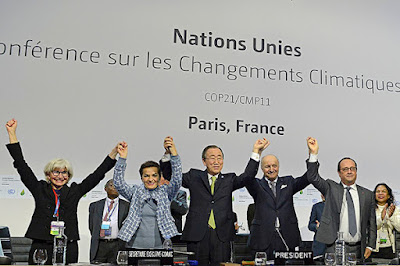
 The Paris Agreement is a climate change treaty that was signed in Le Bourget, Paris, France by 197 countries on 12th December 2015. It is one of the most widely subscribed to international agreements having near universal acceptance. It succeeds the Kyoto Protocol and is to ‘govern’ from 2020 onwards. The Agreement is based on the parent treaty of the UN Climate Change Convention, which is the basis for all international laws about climate change. The fact that climate change is a global challenge is what informs international cooperation on the issue because emissions anywhere affects life everywhere. Therefore, for action taken to be successful, all parties must be involved and everybody’s voice heard. This agreement, which tries to be holistic, looks at all aspects of climate change and involves all stakeholders. It is different from the previous one because it involves the participation of both developed and developing countries in mitigation (cutting emissions) and is ‘bo...

What Is COP27?

Image
COP 27 refers to the annual climate summit attended by all members of the UN Climate Change treaty. In 2022, this is taking place in the resort city of Sharm-el-Sheikh in Egypt as from November 6 th to 18 th . The summit comes hot on the heels of COP26, the pivotal meet that took place last year in Glasgow. It takes place in quite a crucial year, 2022, because of events in the international space. There are tensions around global energy supply and the effect on energy security which underpins economic development and stability for many countries.   Also there are shocks in food supply chains and disruptions in the manufacture of products such as fertilizers. Significantly, climate related events have grabbed world headlines in negative ways this year. COP27 comes on the backdrop of intense floods that covered well over 30% of Pakistan and caused massive damage, the floods in Nigeria, and the scorching heat waves in Europe of which this year’s summer was the hottest in half a m...

Transparency And Climate Change

Image
Transparency refers to the clarity and visibility of the work done in climate action. It is clearness in the processes and efforts in the climate fight. Because the nature of climate change is that it is a global challenge, it needs a concerted worldwide effort to deal with it. This necessitates all hands on deck, and internationally the governing body, the UNFCCC, follows the principle of common but different responsibilities and the cutting of emissions according to respective capabilities. That is, everyone should carry out mitigation, but as according to their levels of emissions. Therefore big emitters should cut more and so on. Consequently all efforts to implement the purposes of the UN convention on climate change should be transparent and clear. Transparency is an important part of the climate fight, being involved in practically every aspect of climate action. In emissions reduction, it is necessary for every concerned party to openly see that polluting entities are clear...

Youth And Climate II

Image
  Youth form an integral part of the fight against climate change. As a matter of fact, it is impossible for climate action to be successful without involving young people as the most important stakeholders. They are so because climate change has consequences on both their present and future. In other words, in an already changing climate regime, young people have to deal with the impacts on their lives presently, and in the future; their lives are at stake too. Young people also happen to be one of the most vocal constituencies in climate action, with all ages from children, adolescents to young adults expressing their commitment to pressure their leaders; both political and industry leaders; the private sector and all decision makers to act on climate. Currently, it is estimated that youth are about 1.8 billion globally, though actual figures are higher. The two biggest continents, Asia and Africa which are also the most populous, also host the youngest populations on Earth. ...

The Glasgow Pact

Image
  The Glasgow Pact was an agreement signed by 197 countries in November of 2021 in Glasgow, Scotland under the leadership of the United Kingdom/Italy. This event took place under the auspices of COP26, the international meeting of parties to the UNFCCC, which takes place each year. This conference was well awaited and with good reason: it was postponed from 2020 to 2021 and was a crucial one because all nations were to submit fresh climate plans showing increased ambition to cut emissions. These plans, called nationally determined contributions, were initially submitted in 2015 when the Paris Agreement was signed, and are meant to be upgraded every five years. This particular meet was important because the decade ending 2030 is of grave significance to climate change. We have a slight window within which to act, if at all we are to save this planet from extreme climatic changes, and keep alive and thriving the intentions of the Paris agreement 2015. The global carbon budget is ...

Indigenous People And Climate Change

Image
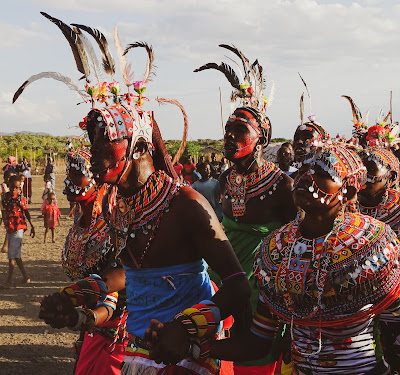
  Indigenous people are peoples who are native to a particular geographical area and have lived there for a long time frame (decades to centuries) before the arrival of other migratory peoples bent on conquest. Indigenous people can trace their ancestral heritage to a particular region which they have occupied for a very long time. There are more than 476 million indigenous people in the world today. They are about 5% of the Earth’s population but constitute 15% of its poorest. However 22% of the Earth’s surface is under their management and 80% of the Earth’s natural wild flora and fauna, its biodiversity, is also in indigenous territories. The colourful Samburu community of Kenya. Source laura/iwaria With regard to climate change, indigenous peoples are important because they are a vital component in the climate fight. They are also a unique group of people who are differently affected by human caused climatic changes. We look at a few reasons why. Indigenous people are spe...