Posts

Agriculture, Water And Climate Change

Image
Agriculture is what feeds the world and ensures food security. For millennia, people have tilled the land and kept animals to support themselves and provide food. Agriculture is a big economic sector on its own, with returns amounting to billions of shillings and employing millions of people. Agriculture is dependent on water supply for crop growth of which majority of this is rainfed. Rain-fed agriculture implies reliance on rainfall. Some of the optimal growth conditions for food and cash crops are temperature, moisture and sunlight. Now climate change basically means that the greenhouse effect and global warming has completely thrown the hydrological cycle out of balance. This water cycle is what controls rainfall, snow, ice and so on. Effects of climate change are all effects of water. This includes droughts, heavy rain and flash floods, heatwaves, permafrost thaw, cyclones and glacier retreat and sea level rise as well. All of these have to do with water – either too much of i...

Conflict, Water And Climate Change

Image
Water is essential for life. To start with, every person on the planet (about 8 billion of us) need drinking water to survive. Climate change, population growth and economic development are increasingly putting pressure on freshwater supply from which drinking water is obtained. Supplies are finite and climate change is changing the availability, access and quality of drinking water. Normally, a large portion of human society relies on rainfall which recharges lakes and rivers (surface water) and aquifers (groundwater), as well as glaciers and snow which provide water in hot months. Climate change has altered the entire water cycle. Higher temperatures mean more water is removed from the earth’s surface through evapotranspiration. A warmer atmosphere absorbs more water vapour while more moisture in the air increases its ability to hold heat and on and on it goes. When this vapour cools it distills as heavy and sudden rain. Lack of enough drinking water caused by droughts, heatwaves...

Cities, Water And Climate Change

Image
 Cities and urban centres house about half of mankind, with that number expected to reach three quarters of the world by 2050. By virtue of being some of the most populated areas on Earth, they are also by default the biggest consumers of both energy and water, and the biggest source of greenhouse gases. Water is paramount for all living creatures. Specifically so, majority, if not all of land based species need freshwater to survive and thrive. This includes human beings, whose population recently hit the 8 billion mark. Now, about 70% of the Earth is made up of water, and of this, 97% is salt water. The remaining 3% is freshwater, and less than half of this, about 0.05% is in liquid form. The rest is locked up in glaciers, snow and ice. Cities need a good amount of freshwater to function, and to serve the needs of the human populace, household use and all industrial activities undertaken within. In terms of energy, all means of energy production and generation require water...

Climate Change And Wildlife

Image
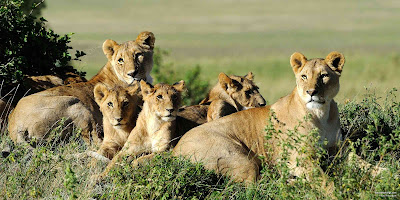
Wildlife refers to all animal and plant life that thrives in the wild and is undomesticated. The natural world is expansive and diverse, with millions of species and probably millions more that have never been discovered in the seas and deep within tropical forests and other places. Climate change affects wildlife because it affects the planet, which is their home. Climate effects determine the physical characteristics of an ecosystem. For example, ample amounts of rain and hot humid weather characterize tropical forests, which then support a variety of wildlife which are adapted to such kind of climate. With climate change, entire regional and micro-climates are altered, with different areas globally experiencing longer and unexpected droughts, flash floods and sudden heavy rain, tropical cyclones and sea level rise, permafrost thaw and glacier retreat, heatwaves and wildfires. Climate change first of all aggravates other threats to wildlife such as poaching and habitat loss. ...

Climate Change And The Environment

Image
Climate change affects the environment in various and diverse ways. Natural elements such as rainfall, temperature, humidity, wind and moisture are controlled by climate. The environment can mean the sphere in which life exists. Dry land (lithosphere), the ocean (hydrosphere) and the atmosphere, the interaction and combination of which forms the biosphere in which life thrives. Climate refers to the average weather conditions of a particular place that have been observed for a minimum of thirty years. Weather on the other hand refers to more short term changes. For example, it can be cold in the morning and warm in the afternoon. That’s weather changes. When aggregated for many years, these expected and predictable weather outcomes is what is known as climate. Climate change in the sense in which it’s normally used refers to the distinct change and alterations of the entire global climate system, meaning that every place in the planet has experienced disruptions of normal clima...

A Summary Of the Synthesis Of The Sixth Assessment Report By The IPCC

Image
  This synthesis summarizes the findings of the three working groups and the previous three special reports.   It assesses the state of climate knowledge to the present. First, is that global surface temperatures have warmed by 1.09 degrees since 1850-1900 up to 2011-2020. Warming is higher over land (1.59 degrees Celsius) than over the ocean (0.88 degrees). Well mixed greenhouse gases (ghgs) have caused a rise of temperatures by 1.07 degrees from 1850-1900 to 2010-2019. The noted increase in these gases is definitely from human activities. In 2019, the ghg levels were 12% above records in 2010 and 54% higher than 1990. Developed countries have the highest per capita emissions. Human influence on the global climate has led to impacts such as floods and heavy precipitation, droughts and heatwaves, cyclones and sea level rise. In fact the seas have risen by 0.20 meters from 1901-2018. About 3.3-3.6 billion people are directly vulnerable to climate change and many areas lac...

A Summary Of The IPCC Report - Mitigation Of Climate Change 2022

Image
This body of work picks up from the previous working group II report. Its focus is on mitigation. This part of the AR6 series takes place in an environment of new climate policies and agreements, changing international landscape governing climate i.e. the UN Climate Change, Paris Agreement and Kyoto Protocol. There is also a sizeable increase in the role on non-state actors and increasing links between mitigation, adaptation and sustainable development. Notably, this document takes into consideration socio-economic factors in mitigation. Emissions of greenhouse gases have risen since 2010 to 2020, and collectively greenhouse gases amounts have increased in the air since 1850. Carbon dioxide is the highest, followed by methane and fluorinated gases. In fact, all classes of ghgs (greenhouse gases) have recorded increases. The carbon budget left to hit 1.5 degrees of warming is 500GtCo2 equivalent (gigatonnes of carbon dioxide) with 50% probability, from 2020 going forward. The budget...