Posts

Showing posts with the label climateaction

A Summary Of The State Of Climate Africa Report 2021

Image
The report was produced by the World Meteorological Organization (WMO) based on different climate variables over sea, land, air and living organisms such as air and water temperature, glacier and sea ice, leaf index, vegetative cover, water vapour, greenhouse gas fluxes, soil carbon and moisture, river discharge and lake size, permafrost and albedo, groundwater, marine life, rain and cloud cover etc. It starts with noting that Africa is warming faster than the global average at 0.3 degrees per decade between 1991-2021. 2021 is the third or fourth warmest year on record with North Africa the warmest of the six African regions (East, West, North, South, Central, Indian Ocean Island countries). Sea level rise rate is the highest globally with the Red Sea and South Western Indian Ocean recording the highest values. All related effects like coastal flooding, erosion and saline water intrusion into groundwater will affect 110-116 million people. Water will become scarce continentally and cou...

A Summary Of the Synthesis Of The Sixth Assessment Report By The IPCC

Image
  This synthesis summarizes the findings of the three working groups and the previous three special reports.   It assesses the state of climate knowledge to the present. First, is that global surface temperatures have warmed by 1.09 degrees since 1850-1900 up to 2011-2020. Warming is higher over land (1.59 degrees Celsius) than over the ocean (0.88 degrees). Well mixed greenhouse gases (ghgs) have caused a rise of temperatures by 1.07 degrees from 1850-1900 to 2010-2019. The noted increase in these gases is definitely from human activities. In 2019, the ghg levels were 12% above records in 2010 and 54% higher than 1990. Developed countries have the highest per capita emissions. Human influence on the global climate has led to impacts such as floods and heavy precipitation, droughts and heatwaves, cyclones and sea level rise. In fact the seas have risen by 0.20 meters from 1901-2018. About 3.3-3.6 billion people are directly vulnerable to climate change and many areas lac...

Wastewater And Climate Change

Image
Wastewater refers to water that is used to carry municipal waste flows from domestic, commercial and industrial flows. It is largely an under-regarded and under-regulated area in relation to climate change. However, mounting evidence shows that it is an important part of both climate change mitigation and adaptation, contributing to and being affected by the phenomenon. Let us start with mitigation. Only about 20% of water globally is treated, while the rest is discharged in its raw form vastly polluting the environment and releasing climate warming emissions. Wastewater contributes to 5% of worldwide emissions. Wastewater uses a lot of energy in collection from source, transport and treatment of influent (incoming sewage). This energy is mostly electricity or vehicular transport of which the system is powered by fossil fuels which are the number one source of greenhouse gas emissions that cause climate change. WWTP works at Ruai, Nairobi (Picture:Edison Mutumba) When the was...

Water, Mitigation And Climate Change

Image
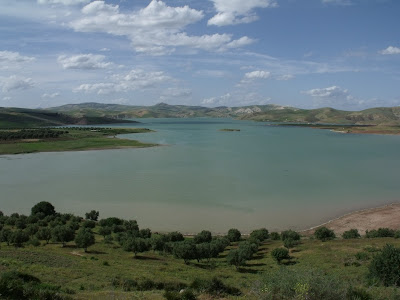
Freshwater systems are an indispensable part of climate action, because mitigation, which is the cutting avoidance or absorption of carbon emissions, is not possible without water. Water therefore forms the central focus of climate action. Only 3% of the world’s water resources is freshwater in both solid (frozen) and liquid (water) form while the rest is saline sea water in the oceans. With a growing world population, higher energy demand and the effects of climate change, the demand for freshwater will spike against a limited supply. Moreover, as it becomes ever more important to cut greenhouse gas emissions, the role of freshwater in climate mitigation will come to the fore. A serene natural landscape. Source(Emmanuel/iwaria) Safe and clean water is a human right and is one of the sustainable development goals. Freshwater itself is a natural resource that plays many roles in mitigation. The first is in nature based solutions like forests. Forests mitigate climate change becaus...

Desalination, Water And Climate Change

Image
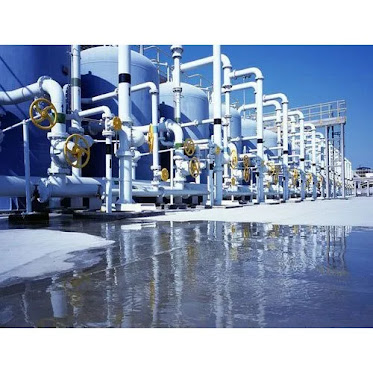
Desalination refers to the process of separating water from salt in sea water and brackish water. In essence, it is used to obtain freshwater from the vast resources of the sea. The global ocean covers 70% of all land on Earth and constitutes 97% of all water resources. That’s quite a big figure which makes oceans a viable source of water. With climate change, the impacts on water are quite significant. Climate change caused droughts are expected to increase water scarcity in many places, by drying out the land. This will affect surface water, because of high evaporation rates caused by consistent rising temperatures. Again, climate change causes changes in precipitation with rainfall quantity, distribution and seasonality affected. All this means that rainfall is no longer a very reliable source of freshwater. Climate change affects snowpack, with lesser amounts of snow in the cold months, which also melts earlier in the hot months of spring and summer. Snowpack is what feeds ri...

Water, Adaptation And Climate Change

Image
 Adaptation to climate change will to a very large extent involve water. The impacts of climate change are already being felt in the human and natural world and this will continue for the foreseeable future. Water will be the single most important factor involved in adaptation because of three reasons. One is because of how biologically important it is in the processes of life, two is its value in all economic sectors. Water is an invaluable component of both the natural and human world. The third reason is because water is affected by climate change. Rising temperatures occasioned by increasing amounts of atmospheric greenhouse gases interfere with the hydrological cycle at both the local and global levels. Accordingly higher temperatures are already causing increased glacier and ice melt and interrupting the processes of the cryosphere (the frozen parts of the Earth). Ice sheets both in polar and mountainous regions are melting at higher and faster rates. This melt is what gi...